

The Wit’s Guide to Insomnia
Or, mind over mattress
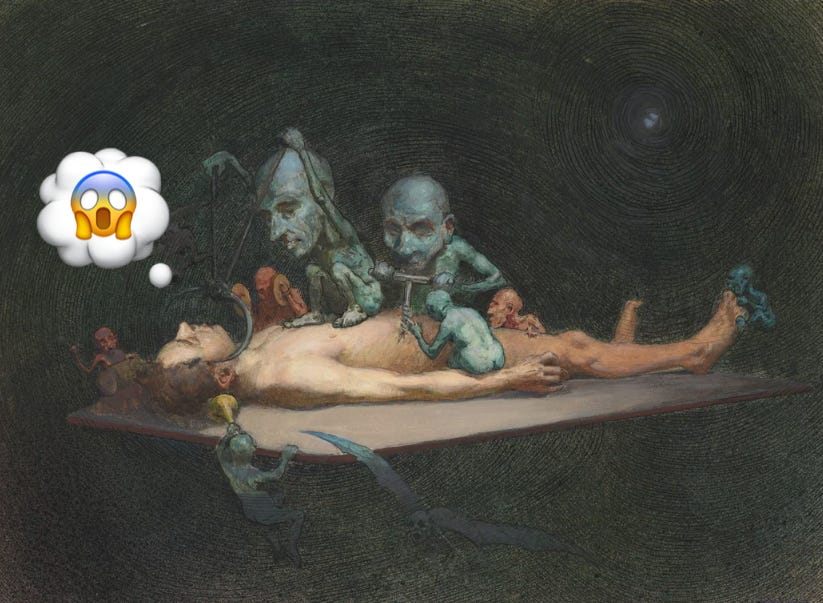
When you can’t get to sleep, try coming up with some aphorisms about your condition. This will pay it forward, helping newsletter writers of the future get wit quicker and thus hit the sack sooner.
“I haven’t slept for ten days, because that would be too long.”
— Mitch Hedberg
The upside of insomnia is more time to work, though this might only make your brain spin faster and sleep ever more elusive. Dickens, Dostoyevsky, Proust, and Kafka all suffered, perhaps none more than the Pessimist of Prague. It’s been argued that the “the oppressive, enigmatic and bizarre atmosphere of Kafka’s literary works” is a result of his eternal fatigue, so at least it created a mood. Though his decision to go all in on afternoon naps led to hallucinations, so don’t do that.
“Insomnia, a dreaded blight,
Might well become a boon
If it could be transferred from night
To afternoon.”
— Richard Armour
Lewis Carroll’s stated cure for insomnia was math, though his real solution was being equally happy sawing or solving logs. The Jabberwockist matter-of-factly reasoned that the choice was “either to submit to the fruitless self-torture of going through some worrying topic, over and over again, or else to dictate to myself some topic sufficiently absorbing to keep the worry at bay.” He was clever enough to decide that, even if it meant less sleep, “an hour of calculation is much better for me than half-an-hour of worry.”
“He never attempted to sleep on his left side, even in those dismal hours of the night when the insomniac longs for a third side after trying the two he has.”
— Vladimir Nabokov
Another upside of insomnia, Groucho Marx found, was that people loved to hear about it. After losing a small fortune in the stock market crash of 1929, he developed “galloping insomnia, and in my social circle sleeplessness now began to replace the stock market as the chief topic of conversation.” In those anxious times, he reported in his memoirs, everyone wanted to discuss being underslumbered. At parties, “guests who had been half asleep for hours would shake themselves back to consciousness and with bloodshot eyes listen with both ears to the victim’s detailed account of last night’s harrowing hours.” Groucho’s best advice was that “what cures one man is another man’s poison.” Less helpfully, he offered this:
“Many people get a good night’s rest by counting sheep. If possible, it’s advisable to have the sheep in the bedroom. However, if you are allergic to wool (and most of the woolen sweaters I buy seem to be), you can also court sleep by counting panthers. Of course, there is always the danger that the panthers may eat you, but if you suffer from insomnia that is really the best thing that can happen to you.”
They say darkness helps you nod off, and you can’t get much darker than Emil Cioran. The French-Romanian miserabilist wrote comically bleak aphorisms and books like The Heights of Despair and The Problem With Being Born. He credited insomnia for his dour outlook, explaining quite eloquently that when you get a good night’s sleep, it’s like being reborn, but when you can’t sleep, you’re forced to continue in the same consciousness, over and over, until you start saying things like:
“It is not worth the bother of killing yourself, since you always kill yourself too late.”
— Emil Cioran
But just as it’s always darkest before the dawn, there was some welcome relief for Cioran. He took up cycling by chance, and realized that extreme exercise cured his insomnia. As he told an interviewer, “When you do a hundred kilometers a day, there’s no way you’re not going to sleep, it’s out of the question.” Which makes this an unexpected sequel to last week’s Wit’s Guide to Bicycles. “And so,” Cioran reported, “this providential bicycle saved me.”

“I only sleep with people I love, which is why I have insomnia.”
— Emilie Autumn
For some reason this week’s newsletter made me alarmingly dozy. If it has that effect on you, I guess that’s good? But keep your naps to 20 minutes and try not to turn into a giant bug. Next week?
Oh, here’s a random question for a piece I’m writing…
When someone bumps into you on the street, holds up a line, or otherwise commits a tiny social transgression in Canada, they say sorry.
What do you say in response?

Each month my paid subscribers and I exchange some of the best things we’ve read, seen, heard, and experienced in a special issue called Get Wit Picks. This week, I realized that, though I have been on some form of the internet for the majority of my lifetime, I have still missed memes that were allegedly everywhere and that directly pertain to my interests. Is there a word for this?
I learned yesterday of the “We should improve society somewhat” meme, which is celebrating its 10-year anniversary with a Kickstartered book about its impact, use, and misuse:
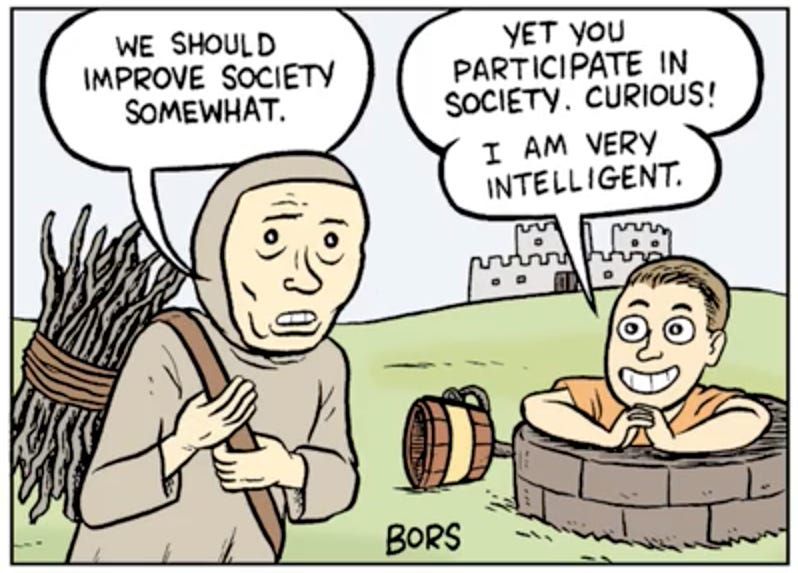
Imagine, a whole decade of me not knowing about this or even such remixes as:
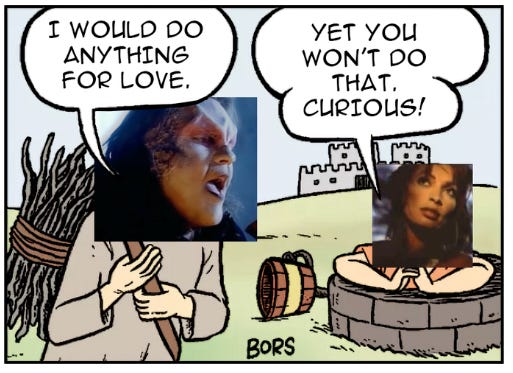
This is why we need to bring back the monoculture. (Yet I have a Substack. Curious!) With your support, I pledge to do just that.

Get Wit Quick No. 374 was cooler than the other side of the pillow. Interestingly, I found a precursor to the Nabokov line about needing a third side on which to sleep in the work of Langston Hughes, whose character Simple offers this lament: “Two sides are not enough. I’m tired of sleeping on either my left side, or on my right side, so I wish I had two or three more sides to change off on. Also, if I sleep on my left side, I am facing my wife, then I have to turn over to see the clock in the morning to find out what time it is. If I sleep on my right side, I am facing the window so the light wakes me up before it is time to get up. If I sleep on my back, I snores, and disturbs my wife. And my stomach is out for sleeping, due to reasons which I mentioned. In the merchant marine, sailors are always talking about the port side and the starboard side of a ship. A human should have not only a left side and a right side, but also a port side and a starboard side.” I agree; let’s get a Kickstarter going! The mascot of this newsletter is Magnus the multi-sided magpie, named after the magician from the Deptford Trilogy. The title font is Vulf Sans, the official typeface of the band Vulfpeck. The inferior-for-now and still free AI replicant is at getwitquicker.replit.app. The book was Elements of Wit: Mastering The Art of Being Interesting. Tap the ❤️ below to avoid insomnia, maybe.
I say: "pas de problème."
Canada, although from England originally.