

The Wit’s Guide to Luxury
Or, vulgar foibles
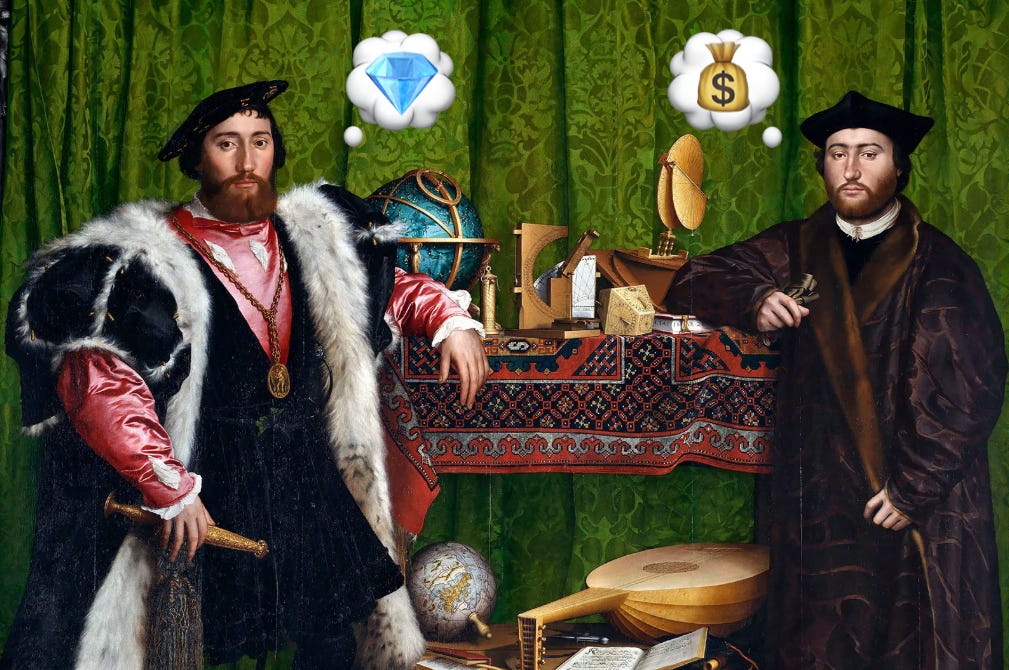
Luxury is garbage. That’s not me talking — I’ll happily take the upgrade to premium economy! — but rather the economists. The dismal scientists define luxury as an inessential good, the conspicuous waste our economic engines produce. It’s plenty of scarce inputs yielding not much additional function. A Balenciaga handbag, no matter how capacious, can’t carry more than a tote bag.
“The saddest thing I can imagine is to get used to luxury.”
— Charlie Chaplin
And maybe luxury really is turning into garbage. The modern excuse for paying way too much for a given product is not the brand name (we’re all way too smart for that) but rather the smug satisfaction in knowing that it’s quality. But don’t overlook the series of exposés calling out high-end brands for their shoddy craftsmanship! Who among us can forget the time stylist Wisdom Kaye called out Miu Miu on TikTok after one of the gold buttons popped off his denim zip? If you notice I’m no longer wearing Miu Miu, that’s why.
“I have the simplest tastes. I am always satisfied with the best.”
— Oscar Wilde
One of the early critiques of Ian Fleming’s James Bond was the character’s conspicuous embrace of brand names. Long before that became a distinct feature of the movie franchise, it was seen as a flaw of the books. “The idea that anyone should smoke a brand of cigarette not because they enjoy them but because they are ‘exclusive’ (that is, because they cost more) is pernicious and it is implicit in all Mr Fleming’s glib descriptions of food, drink and clothes,” a critic wrote in The Guardian. Fleming responded that though he himself was a man of simple tastes (“I myself abhor Wine-and-Foodmanship. My own favourite food is scrambled eggs”), his readers, “still suffering from war-time restrictions,” thrilled to the luxurious world of espionage. “Alas,” he wrote, “Bond is irretrievably saddled with these vulgar foibles.”
“We’re too poor to economize. Economy is a luxury … our only salvation is in extravagance.”
— F. Scott Fitzgerald
Will the future be all luxury, all the time? Before the book Abundance became a political platform, there was a 2019 manifesto with the wonderful title Fully Automated Luxury Communism. The premise was that the robots will quickly, cheaply, and properly sew the gold buttons on our denim zips so that the Marxist dream will come true for everyone. Huge if true, though present conditions feel more like Total Boomer Luxury Communism, wherein the Marxist dream comes true for, um, not everyone.
“Living in the lap of luxury isn’t bad, except you never know when luxury is going to stand up.”
— Orson Welles
All that said, empirical research suggests it is nice to have nice things. Or to quote Jim Dixon, the hero of Kingsley Amis’s Lucky Jim, “there was no end to the ways in which nice things are nicer than nasty ones.” I recently came across a clever guide to ethically and efficiently embracing this ideal from Jehan Azad at the Atoms vs Bits blog. We all know it’s bad to be pennywise and poundfoolish, but to be pennywise and poundwise is “an austere and joyless way to live for most of us.” The solution, he argues, is to be pennyfoolish and poundwise. And that’s where the small luxuries come in, the nice toothpaste with nano-hydroxyapatite and, if you’re lucky enough to live in 2009, the avocado toast. It’s still garbage, but at least there’s less of it.

“We act as though comfort and luxury were the chief requirements of life, when all that we need to make us really happy is something to be enthusiastic about.”
— Charles Kingsley
That CNN article about the enshittification of luxury is full of gems, and it sent me down a rabbit-fur-lined rabbit hole to find a guy “named” Tanner Leatherstein who specializes in Leathertainment, which consists of cutting open designer purses to inspect and/or expose their cut corners. Hopefully he will write a book called What We Talk About When We Talk About Leathertainment and it will win the Booker. And now that we’ve covered that, how about next week?
The pinnacle of my career, no big deal
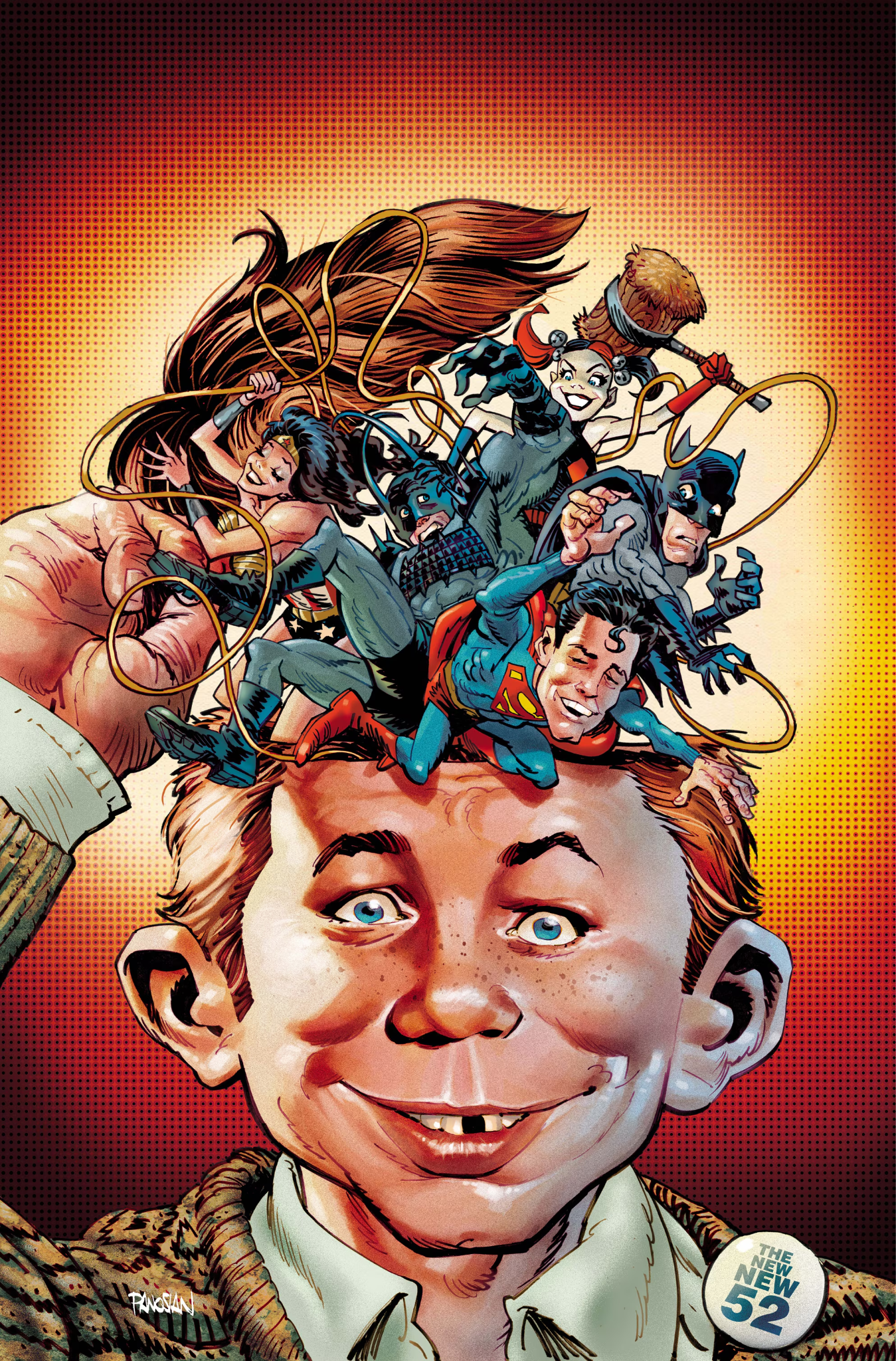
My long-sitting professional rivalry with comicist Chip Zdarsky has paid off big time! The thinking man’s inking man has been granted special permission to revive MAD Magazine for one issue only and he relented to my incessant pleading to be part of his unusual gang of idiots. It’s out on April 1, as the DC press release grudgingly admits, and finally finally finally, someone (me) will make fun of Superman.

Get Wit Quick No. 354 was inspired by the legend of the Chinese mandarin who had himself woken up three times every morning simply for the pleasure of being told it was not yet time to get up. That line popped up in one of my quotation dictionaries credited to Argosy, though I don’t yet have the luxury of knowing who that is. This newsletter’s mascot is a magpie named Magnus after the magician in Robertson Davies’ Deptford Trilogy. The title font is Vulf Sans, the official typeface of the band Vulfpeck. The inferior-for-now AI replicant is at getwitquicker.replit.app. The book was Elements of Wit: Mastering The Art of Being Interesting. The ❤️ below is lined in premium Corinthian leather, imported just this morning from deepest Corinthia by Ricardo Montalbán himself. Tap it to feel how the other 1% lives!
"Mad about DC", guest edited by the fiendishly clever Chip ( Steven Murray ) Zdarsky is a treat in store.
On this week's topic, perhaps some ancient readers such as myself will remember a British TV comedy from the late '60's, entitled, "Never Mind the Quality, Feel the Width" featuring two tailors, one Jewish and the other an Irish Catholic.
Always thought it aptly sums up the tat that passes for luxury today.
Benjamin Errett contributing to MAD Magazine.
"What, me Worry"?