

The Wit’s Guide To Déjà Vu
Or, loop the dupe
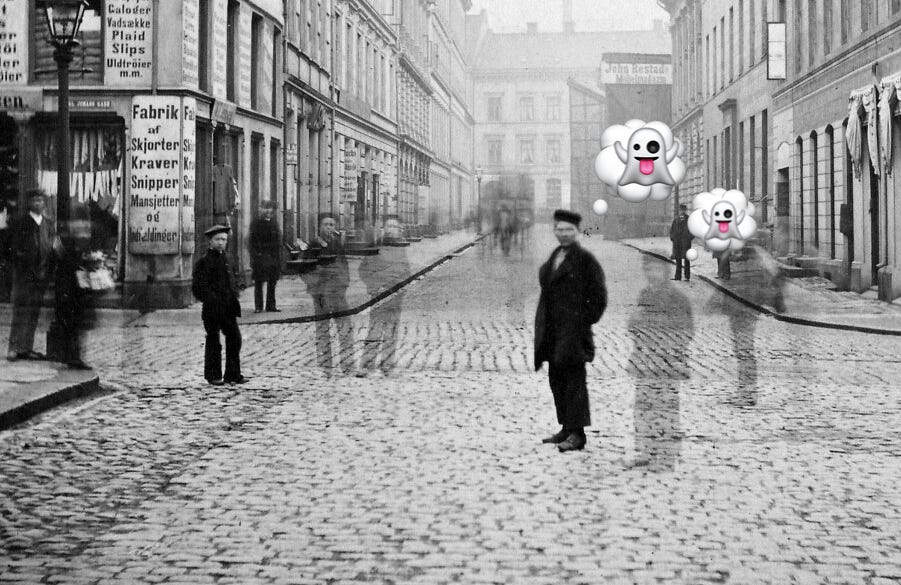
If you’ve got a wacky theory, déjà vu could be just the proof point you need to convince a gullible world. In The Matrix, seeing the same black cat walk across a doorway twice is enough to make Keanu Reeves emit the most understated “whoa” of a whoa-ful career — proof there’s a glitch in the simulation that will require the immediate use of wire fu. The fact they made three more movies and then packaged them in a box set called The Matrix 4-Film Déjà Vu Collection underlines this point.
“It’s not true that life is one damn thing after another — it’s one damn thing over & over.”
— Edna St. Vincent Millay
Even if the copycat was a matrix glitch, it wasn’t actually déjà vu. In his cranky usage guide The King’s English, Kingsley Amis points out that the original term describes a “transient psychological state, not uncommon among those under about forty, in which the subject feels that he has seen before some place where he has provably never been in this life.” Nowadays, he complained, people use the French term to talk about actual memories, which has “added to the stock of verbal garbage.” Ooh la la, la la, la la, etc.
“Right now I’m having amnesia and deja vu at the same time. I think I’ve forgotten this before.”
— Stephen Wright
For Friedrich Nietzsche, déjà vu proved the theory of eternal recurrence. If a room seems oddly familiar, what other explanation could there be than “the eternal sand-glass of existence will ever be turned once more, and thou with it, thou speck of dust!” Or as Geoff Dyer explained in a most Keanu like riff: “The strangest aspect of déjà vu is the way that the sensation always extends slightly beyond the moment when we have registered it as such so that it includes our saying, ‘I’ve just had a déjà vu,’ and we are briefly locked into the loop of the moment just as we are locked into endless loops of life.” Whoa.
“Nothing is more responsible for the good old days than a bad memory.”
— Franklin Pierce Adams
For Sigmund Freud, if a room looks awfully familiar it’s because a womb is awfully familiar. In The Interpretation of Dreams, the Viennese witchdoctor asserted that déjà vu in a dream is about “invariably the genitals of the dreamer’s mother; there is indeed no other place about which one can assert with such conviction that one has been there once before.” At the very least, this assumes you aced the Apgar test.
“Like warmed-up cabbage served at each repast,
The repetition kills the wretch at last.”
— Juvenal
For J.M. Coetzee, watching televised sports was an eternal recurrence. In a letter to Paul Auster, the Nobel-winning novelist calculated that he’d seen every possible permutation of the game of cricket, and yet he still watched. “By the age of thirty, any serious spectator must have moments of déjà vu — more than moments, extended periods. And justifiably so: it’s all been done before. … So why waste my time slumped in front of a television screen watching young men at play? For, I concede, it is a waste of time. I have an experience (a secondhand experience), but it does me no good that I can detect. I learn nothing. I come away with nothing.”
“It’s déjà vu all over again.”
— Yogi Berra
And for Yogi Berra, déjà vu was more like jamais dit. As Quote Investigator explains, when William Safire asked the wisecracker-of-bats in 1987 if he’d really said his all-over-again line, he denied it. But by 1998, he claimed it as his own — and even dug up a specific recollection of blurting it after witnessing Mickey Mantle and Roger Maris hit back-to-back homers in 1961. Berra provably was on that Yankees team, and with enough repetition of the line, his memory manifested it. Even when it’s made up, history repeats itself.

“You mean now?”
— Yogi Berra’s response when asked for the time.
If you’ve read this far, you deserve some reasonable explanation of what déjà vu actually is. And in this essay, psychologist Anne Cleary argues that it usually pertains to the shape of a room and is a form of recognition without immediate recall, leaving us looking inward as our brain frantically rifles through its filing cabinet, searching for the applicable memory. Obviously there’s no actual filing cabinet in the brain, just a whole mess of neurons wrapped in manila sheaths. And next week?

Each month my paid subscribers and I share some of the best things we’ve read, seen, heard, and experienced in a special issue called Get Wit Picks. This is what’s at the end of the rabbit hole!
This week’s taste comes from The Fall and Rise of Reggie Dinkins, a new sitcom that’s a welcome chip off the old 30 Rock. It’s not too much of a spoiler to say that in the show’s universe, there’s a network drama called FDNY Chicago. The tagline: “In the New York Fire Department there is a special unit that fights fires in Chicago. These are their stories.” Excerpts follow throughout episode three, wearing down even the most skeptical viewer:

“This is actually quite compelling,” admits documentarian Arthur Tobin, played by Daniel Radcliffe in his best outing since the title role in the Weird Al biopic. “It was clever how they couldn’t find the subway fire because the train was above ground.”

Get Wit Quick No. 361 never arrived at vuja de, the phenomenon of seeing something familiar as though it were new. The idea was coined by George Carlin, popularized by innovation scholars as a way to solve problems, and certainly never approved by the L’Académie française. This newsletter’s mascot is a magpie named Magnus after the magician in Robertson Davies’ Deptford Trilogy. The title font is Vulf Sans, the official typeface of the band Vulfpeck. The inferior-for-now AI replicant is at getwitquicker.replit.app. The book was Elements of Wit: Mastering The Art of Being Interesting. I feel like I’ve asked you to tap the ❤️ before? No?
You forgot vuja de, the feeling that somethings about to happen again....
Loved the clip of the show! Gave me today's chuckle.