

The Wit’s Guide to Bartenders
Or, adapt practical psychologists
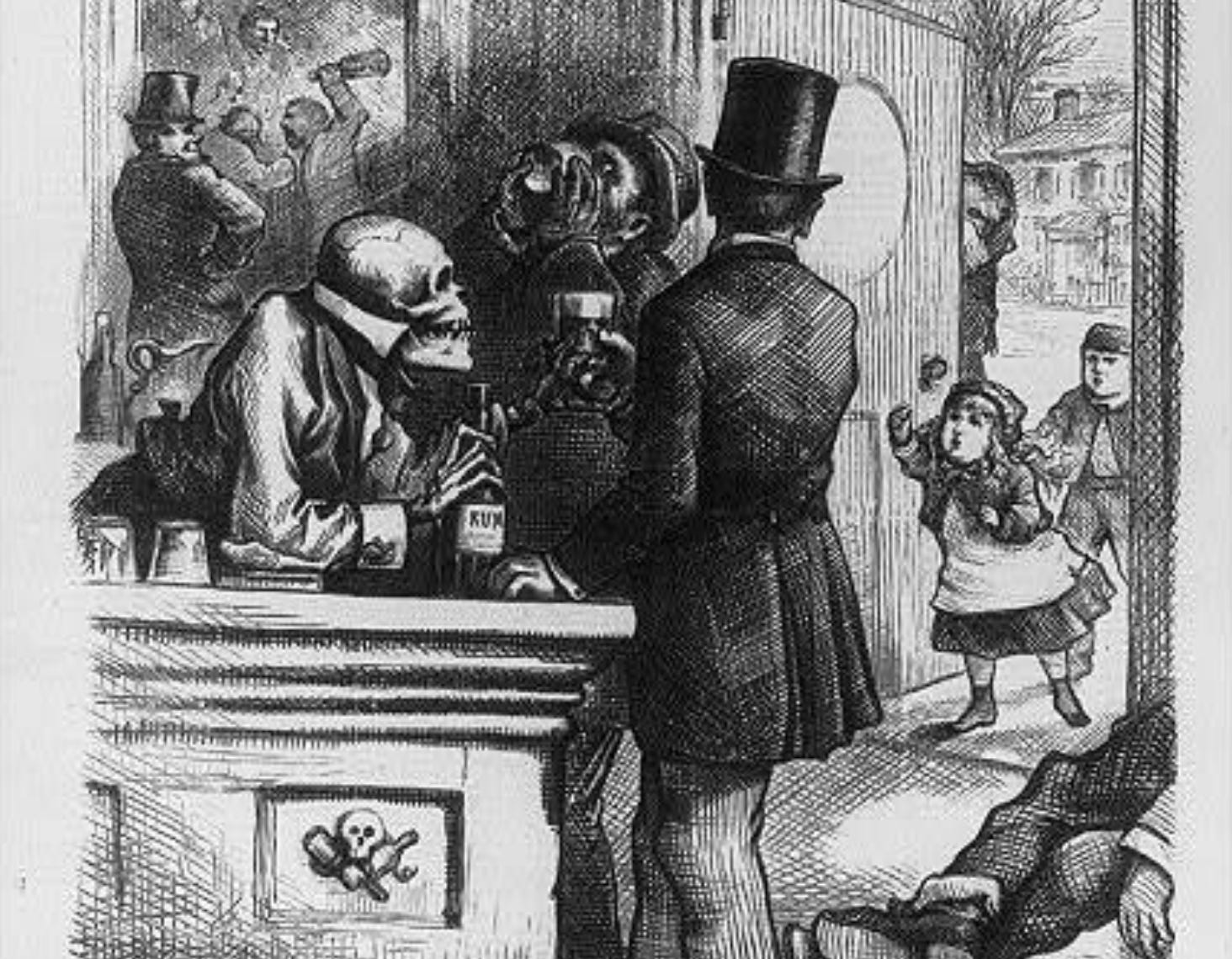
Are bartenders privy to the secret of life? They soak up the spilled guts of all manner of patrons, loosening lips as a professional service. What does that teach them? While glancing through the staff picks shelf at City Lights in San Francisco last week, I spotted The Dim Light Bar Guide, a distinctly 1990s-looking volume by Jack “The Hat” Yaghubian that promised on its cover “No mention of any bar by name” and “Absolutely no drink recipes.” This was the second edition, claiming to be “20% more scathing.” I was convinced.
“Everything I viewed as a perk when I first became a bartender, I now recognize as an occupational hazard.”
— Jack “The Hat” Yaghubian
Who is Yaghubian? He was born in 1949 and has tended bar since 1986, but beyond that the book is light on biography and heavy on bartending wisdom. If you ask Jack what’s good here, he says beer. What do you like? Beer. What’s your specialty? Beer. What do you like making? Beer. Surprise me! (Beer.)
“Philistine: what a German bartender does.
— Robert E. Lewis
How do I know this funny little book is the real deal? I would never serve a below-proof newsletter, so I cross-referenced Yaghubian with H.L. Mencken’s writing on bartenders and confirmed he’s a first-rate representative of the breed. For starters, they always call themselves bartenders, “a lowly word but a sound one.” Further, Mencken wrote, though bartenders are “probably the most adept practical psychologists on earth,” they aren’t much for fancy language. “At least 95% of them, in speaking of the tools and materia of their craft, use the threadbare jargon of the day.” An arm to pour, an ear to listen, a shoulder to cry on, sure, but a silver tongue isn’t in the job description.
“A good writer is not, per se, a good book critic. No more so than a good drunk is automatically a good bartender.”
— Jim Bishop
And that’s Yaghubian. He has no use for tiki drinks, smartphones, beer snobs, credit cards, or anyone who treats his garnish tray as a salad bar. In his world, there are only two mixed drinks: The classic cocktails so well known he doesn’t bother to list them, and the gorilla tits. This is the industry term for an end-of-evening concoction made from the last drops of the last bottles, and in his telling, it’s interchangeable with any non-classic cocktail: Generally drinkable but not actually good. In his view, long-forgotten drinks deserve their obscurity.
“Ever since a man down from them on Jackson Road lost his job as an undertaker’s assistant and became a bartender, Rabbit thinks of the two professions as related; men in both talk softly and are always seen standing up.”
— John Updike
And so we arrive at the mixologist, the bartender’s natural enemy. They do not represent sophistication, Yaghubian writes, but rather “unsophisticated drinking in times of growing hedonism.” Mixologists talk plenty about drinks but not about religion, sex, or politics. They precisely measure every ingredient out of a commitment to nothing more than the bottom line. A mixologist is a “silly made-up word for a job done standing on your feet.” In that he echoes Mencken, who says “even so silly a term as mixologist was devised not by a practicing bartender but by some forgotten journalist … He intended it sportively and it has remained on that level ever since, along with colonel for a whiskey drummer [salesman] and professor for a kneader of pugilists.”
“All regulars tip; if they didn’t, they wouldn’t be regulars, they’d just be annoying customers.”
— Jack “The Hat” Yaghubian
I’ll end my interaction with this bartender in the correct way, with a tip on tips, which is: Tip! To which a bartender may knock their knuckles on the bar, a practice borrowed from card dealers and a way of saying thank you, of announcing that this is their money to fairly take, and of letting the stiffs waiting for service know that this is how it’s done.

“I told Rodney [Dangerfield] that when I felt the whole world was against me, I’d find a tavern, where a bartender would always lend an understanding ear. But Rodney said he tried that once and that when he asked the bartender for a double, the bartender brought out a guy who looked just like Rodney.”
— Norm Macdonald
To be honest, I’m equally happy with a mixologist, a bartender, or Rodney Dangerfield. Also, I self-identify as a fruit bat, one of those weirdos who eats the garnish off the drinks. Next week?

Each month my paid subscribers and I exchange some of the best things we’ve read, seen, heard, and experienced in a special issue called Get Wit Picks.
This week, I’ll close the loop on a question I asked last month: What’s your response when someone says a casual sorry on the street? As a Canadian, I maintain that you should say sorry right back. But I’ve noticed an increasing American proclivity to say “you’re good!” and I used the Canada Day pages of The Globe and Mail to say that this is not how we do it up here. Here’s the gift link!
And here’s my key argument, offered with much respect to my American readers:
[“You’re good”] is how many Americans respond to “sorry,” and in that minor distinction is an emblem of what makes our countries different. “You’re good” is also a de-escalation, but it’s on the speaker’s terms. They are the arbiter of your goodness, not only accepting your apology but rendering a verdict on your standing. It’s presumptuous and individualistic; in other words, American. As we’ve been repeatedly and painfully reminded throughout our history – and constantly in the past year – the single most defining trait of Canadian identity, the one thing that bound this country together from the start, is that we are not them.
Or just say “no worries” and keep the peace on all fronts!

Get Wit Quick No. 377, like all issues of this newsletter, aims to be bangers only. This self-explanatory term comes from Allegory, a bar in Washington, D.C., whose philosophy is explained in Schott’s Significa as “making cocktails that are focused on being delicious. If your drink is complicated from a flavour or technical standpoint then it better taste amazing.” Surely bartenders and mixologists can agree on that! The mascot of this newsletter is Magnus the magpie, named after the magician from the Deptford Trilogy. The title font is Vulf Sans, the official typeface of the band Vulfpeck. The inferior-for-now and still free AI replicant is at getwitquicker.replit.app. The book was Elements of Wit: Mastering the Art of Being Interesting. As the algorithm told the bartender, I’ll have what everyone else is having, and it’ll know better if you tap the ❤️ below.
If asked what superpower I’d rather have, flying or invisibility, I say flying because I already am invisible to busy bartenders.
I searched "gorilla tits" so you don't have to.