

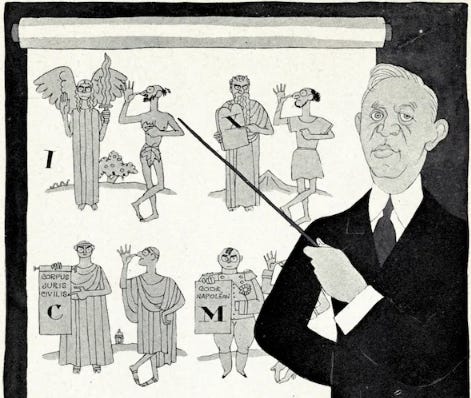
Censorship is bad, actually! Let me make that provocative claim right off the top, before I jump with both feet into all the clever ways people around the world have been inspired to take witty detours because censors prevented them from being direct.
“Censors tend to do what only psychotics do: they confuse reality with illusion.”
— David Cronenberg
What better proof than a book titled On the Beneficence of Censorship? Published in 1984 by Lev Loseff, it’s subtitled Aesopian Language in Modern Russian Literature and details how an inability to directly say that the Tsar had no clothes led writers to build elaborate metaphors and required audiences to read between the lines. As one reviewer put it, “censorship has forced Russian writers to be more creative and interesting than they would have been without it. A whole realm of aesthetically important rhetorical maneuvers is made possible by the implicit presence of the censor.”
“Living under censorship is like being permanently hectored by a parrot and occasionally savaged by it.”
— Christopher Hitchens
To respond to censorship with absurdity may be the best move. It’s what Polish dissidents did in the 1980s: When anti-Soviet graffiti was painted over by censors, protestors painted gnomes on top of the whitewash. Under the banner of “socialist surrealism,” Poles marched for gnomes’ rights and wore gnome hats. As chief gnomist Waldemar Fydrych told the police gnomically: “The thesis is the anti-regime slogan. The antithesis is the splotch of paint. And the synthesis is the gnome.”
“I’m all in favour of free expression provided it’s kept rigidly under control.”
— Alan Bennett
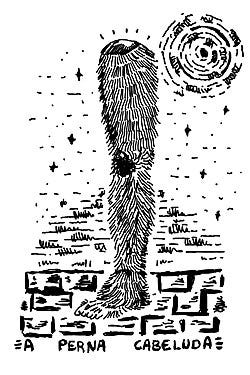
In Brazil under the military junta of the 1970s, newspapers that couldn’t report on the regime’s misdeeds told the story in new ways. When stories were cut from O Estado de São Paulo, editors filled the space with the Portuguese epic poem Os Lusiadas; things got so bad they ran the whole ten-canto shebang twice over. Meanwhile, up in Recife, Diário de Pernambuco managed to report on the military’s unspeakable crimes by assigning them to this supernatural, disembodied hairy leg, as brought to life in last year’s movie The Secret Agent:
“Everybody favours free speech in the slack moments when no axes are being ground.”
— Heywood Broun
During the Second World War, army censors read every letter servicemen sent home to their sweethearts. Ostensibly this was to catch any information about troop movements that could aid the enemy, though in practice it helped create a forerunner of sexting through postal acronyms. By scribbling BURMA (Be Undressed Ready My Angel), NORWICH (kNickers Off Ready When I Come Home), or MALAYA (My Ardent Lips Await Your Arrival), the grunts foreshadowed grunts whilst teaching the Nazi spies about geography.
“Let’s find out what everyone is doing,
And then stop everyone from doing it.”
— A.P. Herbert
All of which is to say that constraints can breed creativity. Ideally these constraints don’t take the form of the jackboot of the state on the neck of the artist, or for that matter the jackboot of private corporations. Come to think of it, I’m pretty much anti-jackboot no matter who’s wearing them. If and when a clever way can be found to say what needs to be said, it’s life-affirming wit. In China, the official censorship policy is called harmony (和谐, héxié), which sounds like the word for river crab (河蟹, héxiè), variations of which are used by dissidents to speak out of tune. The Great Firewall is impressive, but the censors can’t catch everything. And if that doesn’t give you a sliver of hope for humanity, it should at least make you feel better about puns. Or crabs.

“A censor is a man who knows more than he thinks you ought to.”
— Laurence J. Peter
Back in my newspaper days, devoted reader Craig Courtice wrote a piece for us on the profane HBO series Deadwood. His conceit was to write it in the show’s sweary argot, with black bars covering the offending words. Due to a printing error, the black bars were transparent in the next day’s paper — and somehow, nobody minded. Whew! And for next week?

Approximately each month, my paid subscribers and I exchange some of the best things we’ve read, seen, heard, and experienced in a special issue called Get Wit Picks. This week, I was profoundly chuffed to receive a zine in the mail from loyal supporter Duncan Bradley, who maintains a terrific Substack about data visualization at graphpaper.substack.com. His analogue publication, How To Sound Smart When Talking About Charts, is beautifully designed and studded with witty quotations such as:
“Whenever I am infuriated, I revenge myself with a diagram.”
— Florence Nightingale
“Graphs are like jokes: if you have to explain them, they have failed.”
— Sally Bigwood
“If it’s about farts, draw a butt for God’s sake.”
— Mona Chalabi

If you’re in the U.K., you can order a print copy here. If you’re on the internet, you can read the digital version here. For God’s sake, check out Duncan’s wonderful work!

If Get Wit Quick No. 387 had been mailed to you, I would have scrawled RADIO on the envelope for “Romance And Delight I Offer.” Frankly, this could be a good motto for the CBC. The mascot of this newsletter is Magnus the magpie, who won’t be silenced. The title font is Vulf Sans, the official typeface of the band Vulfpeck. The inferior-for-now and still free sloppelganger is at getwitquicker.replit.app. The book was Elements of Wit: Mastering The Art of Being Interesting. No one can make you tap the ❤️ below!
Dear Benjamin,
Great piece as always!
Some of my fave quotes this go-round:
“Let’s find out what everyone is doing,
And then stop everyone from doing it.”
— A.P. Herbert
“Censors tend to do what only psychotics do: they confuse reality with illusion.”
— David Cronenberg
“A censor is a man who knows more than he thinks you ought to.”
— Laurence J. Peter
Thank you for sharing!
Love
Myq
PS This is also a very funny quote:
“If it’s about farts, draw a butt for God’s sake.”
— Mona Chalabi
In 2017, I wrote a short story about a government which begins secretly removing words from the national vocabulary until there are only "yes" and "no," and a vote is finally held to choose between them.
Whether the story works is not for me to say; but, it did cause me to start collecting examples I saw in the real world. Here are a few you will probably recognize:
* "Although disputed by the Trump Administration, it was reported that the CDC was given guidance not to use seven words in any budgetary documents. The forbidden words were: vulnerable, entitlement, diversity, transgender, fetus, evidence-based, and science-based."
* "In February 2018, censors in China briefly suppressed the letter N, described as 'the most unusual victim of a crackdown targeting words, phrases and even solitary letters censors feared might be used to attack Beijing’s controversial decision to abolish constitutional term limits for China’s president.' Other words banned by the Communist party included 'personality cult' and 'disagree.'"
* "In January, 2025, the Centers for Disease Control (CDC) began 'purging its website' of words and phrases like transgender, DEI, LGBT, and environmental justice. 'It was unclear whether the pages were being permanently deleted or just removed from public view.'"